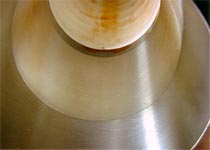
Figure 1.
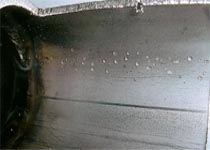
Figure 2.
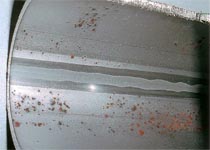
Figure 3.
Background
Rouging had been detected on both the bottom dish of a CIP vessel and inside a number of Pharma-Silicon hoses in a new purified water system. The rouging appeared during the early stages of commissioning, an example of which is shown in figure 1.
Findings
It was initially thought that the rouge deposits were a result of some form of iron contamination from an external source. The visual appearance of the rouging indicated that it appeared to have originated from some other part of the system.
A comprehensive examination of the pipework installation and the rest of the system was subsequently carried out.
The examination of the horizontal pipe sections revealed evidence of pitting corrosion (figure 2). The pitting in some areas was found to be associated with localised rust deposits as shown in figure 3. It became clear that the pitting was the primary source of the iron oxide (rouge) deposits. A metallurgical examination of the pits showed that the morphology was characteristic of chloride-induced pitting attack, which had obviously occurred within a very short period of time.
The next question was - where had the chlorides come from? A review of the analysis of all of the water sources on-site revealed that the chloride contamination could not have occurred within the facility. Subsequent discussions with the manufacturer and their fabrication sub-contractors revealed that the pipework had been tested with mains water that probably contained chlorides of an unknown level. During further discussions, it became clear that the water had probably not been drained properly.
The entire pipework system was subsequently replaced by another fabrication sub-contractor to an acceptable standard.
Key Points
- The presence of a relatively large quantity of corrosion deposit in the form of rouge, at such an early stage in the life of a process system requires thorough investigation. In addition to the possibility that it could be the result of iron contamination in the form of construction debris, it could also be an indication that there is a potentially more serious corrosion mechanism somewhere in the system.
- Chloride-induced pitting is a well known corrosion mechanism that continues to be a common problem in hygienic process installations constructed of austenitic stainless steel. Even though the water used for hydrostatic testing may only contain a relatively low level of chlorides (say 50 - 100ppm), there is always the risk that a concentration mechanism may develop under evaporative conditions if the system is not flushed and drained properly. It is therefore essential that when developing a pressure test procedure, sufficient consideration is given to reducing the risk of chloride contamination. The procedure must then be followed carefully to ensure adherence to the procedure, and that water with a low chloride content is employed. Deionised water should be used wherever possible.