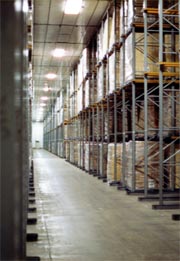
Figure 1.
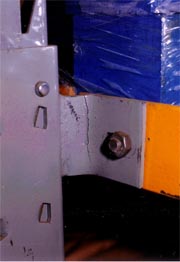
Figure 2.
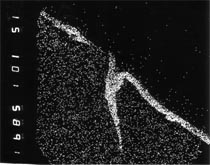
Figure 3.
Background
A number of failures of pallet rail side arm brackets occurred over a period of time in a low temperature cold store operating at minus 28°C. The installation was a drive-in palletised racking system typical of that shown in figure 1, which was used for the storage of frozen food products.
In some cases, the bracket support arms became completely detached and dropped to the floor from a height of approximately 4 metres.
Findings
The investigation revealed that a number of support brackets were found to be cracked as shown in figure 2. The vertical fracture on the inner radius had propagated almost the full height of the plate. Closer examination of the fracture revealed the presence of more cracks situated parallel to the main fracture. It was noticeable that most of the smaller cracks contained the original paint layer.
A subsequent metallurgical examination revealed that the cracks appeared to have developed when the plate was subjected to cold working during the forming procedure.
A number of macrosections of the cracks were subjected to energy dispersive x-ray analysis to determine the elemental composition of the deposit inside the cracks. An elemental map typical of that shown in figure 3 indicated the presence of a titanium-based compound along the full depth of the cracks. The dense white layer on the surface of the plate and along the crack represents titanium dioxide pigment which is a constituent of the paint.
The fact that the paint contained titanium oxide pigment in the cracks confirmed that they must have formed during manufacture. The evidence shows therefore that the failures probably occurred as a result of pre-existing stress concentrators in the form of multiple cracking, which propagated in brittle manner when subjected to impact loading in the low temperature environment.
Key Points
- Rack storage systems should be inspected for any signs of deterioration resulting from either manufacturing defects or service-related defects.
- Failures of racking components should be subjected to a Failure Analysis in order to determine whether there is any liability on behalf of the manufacturer, which may result in either remedial work or complete replacement of the system. All failed components should be photographed and retained for analysis.
Back to Failure Case Histories